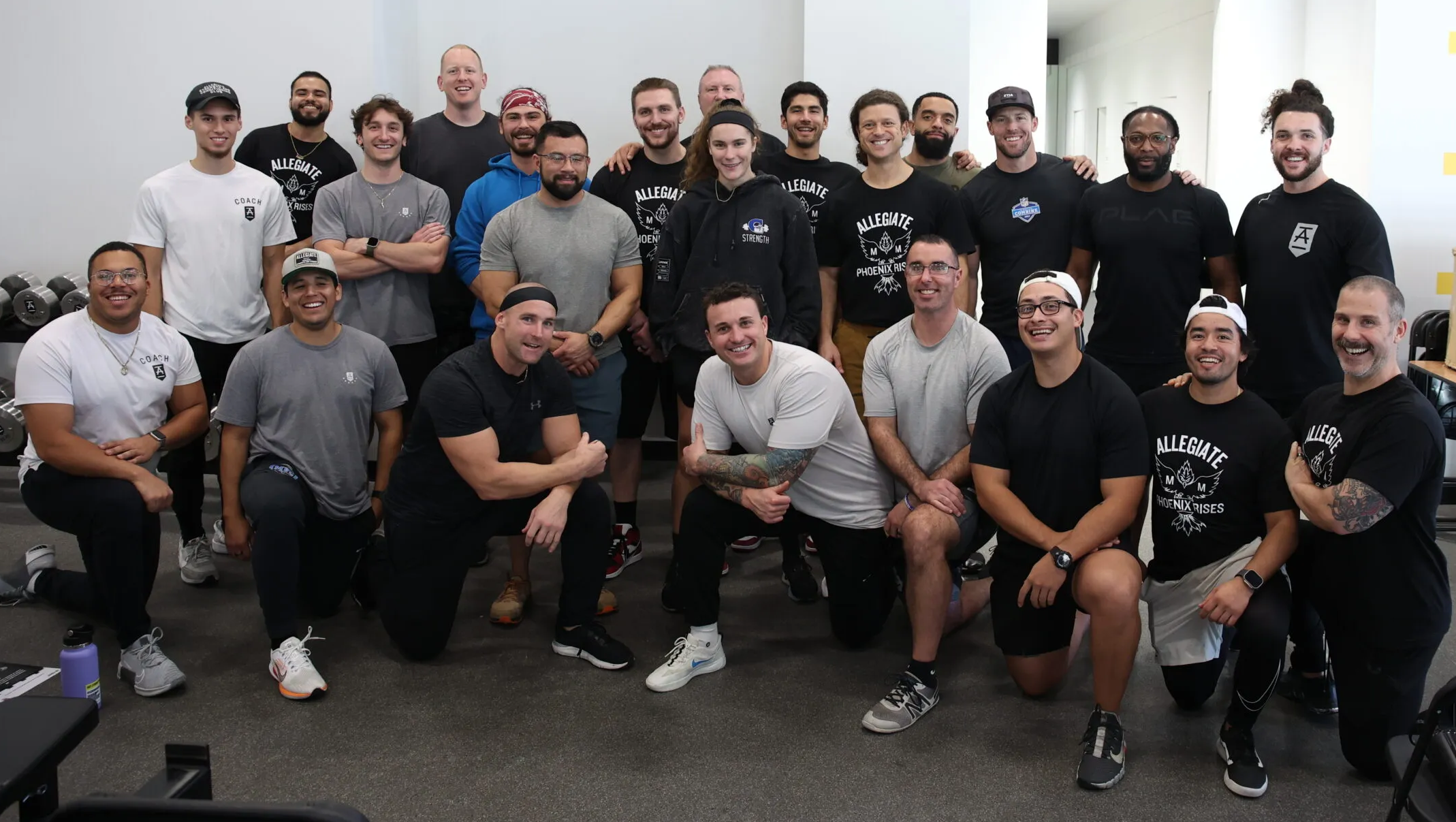

Chinese Weight Lifting, Manuel Buitrago
There’s something quietly humbling about watching a Chinese weightlifter perform a clean and jerk. The precision, the stillness before the storm, the near-effortless expression of force. It looks like poetry, but it’s built like an engineering project. Behind every crisp lift lies a philosophy that goes beyond strength, beyond speed, beyond even hard work. We just finished this book in my Collective Membership; we used it as a prelude to A Demasculuzation of Strength by Bud Charniga. I wanted to set the tone for Charnigna’s thought that if we are going to cite anything as revolutionary, it needs to be considered revolutionary. There is no denying, in terms of dominance, that Chinese Weightlifting is considered the greatest country of all time in Weightlifting, so we should examine that.
For many in the West, weightlifting is still viewed through the lens of brute force or athletic talent. We measure progress in kilos and celebrate peak strength. But China approaches the barbell with a different language—one shaped by universal principles of physics, developmental psychology, and perhaps most critically, an understanding that great lifters are not born, but patiently built.
The 5 Universal Technical Concepts: “Five Words” of technique
- Close: Keep the bar close to your body throughout the lift.
- Fast: Move explosively through the extension.
- Low: Pull under the bar quickly to minimize bar travel.
- Rhythm: Develop a natural flow between movement phases.
- Balance: Maintain equilibrium between horizontal and vertical forces (the “M” shape).
What makes the Chinese system so effective is its totality. It doesn’t just train muscles; it cultivates an athlete’s mind, body, and spirit. From the very first lift, the focus is not simply on results, but on rhythm, feel, and flow. Coaches emphasize that a proper lift is not just powerful—it is close, fast, low, rhythmic, and balanced. These five qualities guide every movement, forming a technical mantra that transcends style and body type.
Gravitational Principles of Lifting: Three key gravitational concepts:
- Equal Magnitude: Lifter and barbell forces must counterbalance.
- Simultaneity: Force direction and timing must occur at once.
- Opposite Direction: As the bar goes up, the body drops down—two forces working in perfect opposition.
This emphasis on movement quality isn’t about aesthetics—it’s rooted in physics. The Chinese approach deeply respects the laws of gravity. A barbell will only rise if the athlete applies force in the right direction, at the right moment, with the right balance of speed and control. Every lifter is taught to feel the harmony of opposing forces: pushing the bar up while pulling themselves down, keeping equilibrium between horizontal and vertical motion. Technique is not merely a performance—it’s a dialogue with gravity.
But philosophy alone doesn’t produce champions. China’s training methodology is systemized to an extraordinary degree. Every aspect of an athlete’s development is accounted for—technical, physical, mental, and even intellectual. A young lifter is not just taught to lift; they’re taught to understand why a lift works. They’re encouraged to ask questions, analyze their movements, and even learn the theory behind training itself. This makes for athletes who are more than just strong—they’re smart, self-aware, and coachable.
7 Training Systems
- Athletic: Build general physical qualities.
- Technical: Refine motor patterns and lifting mechanics.
- Mental: Develop toughness, focus, and resilience.
- Tactical: Learn to strategize and compete.
- Recovery: Use rest and rehab to optimize performance.
- Intellectual: Teach athletes to understand the “why.”
- Mentality: Instill discipline, motivation, and purpose.
Perhaps what’s most surprising to outsiders is how much emphasis is placed on the internal world of the athlete. Chinese coaches believe that every lift begins in the mind. Training the body without training the mentality is considered incomplete, even irresponsible. Instructors talk about “inspiring without overwhelming,” balancing discipline with encouragement, and shaping habits that can outlast motivation.
What makes this system even more impressive is its adaptability. The Chinese model is not dogmatic—it respects individual variation. Coaches observe athletes closely, correcting mistakes in real time, offering individualized cues, and using both collective and targeted methods to develop technical mastery. It’s a living system, built on observation and refinement, not rigid rules.
Of course, all of this is underpinned by science. Training loads are meticulously tracked, not just by weight and volume, but by how the body responds to them. Fatigue, stress, and recovery—all are monitored using physiological and biochemical indicators. When a lifter begins to falter, it’s not seen as a failure of will, but as data to be understood and adjusted.
But even the most scientific approach is guided by wisdom that’s deeply human. One Chinese saying used in coaching translates roughly to: “The officer teaches the soldier, the soldier teaches the officer, the soldier teaches the soldier.” It’s a philosophy of humility and mutual learning. Coaches must be open to new ideas. Athletes must take ownership of their progress. Everyone must be part of the process.
This is where many programs outside of China fall short. We often isolate strength from skill, mental training from physical development, or coaching from learning. But in China, it’s all one fabric. Strength is built alongside technique. Mindset is nurtured alongside muscle. Theory and practice evolve together. It’s not about lifting the heaviest weight today—it’s about becoming the kind of athlete who can do it for years to come.
Watching a Chinese lifter isn’t just watching someone strong. It’s watching the result of a philosophy that has been patiently, carefully, and thoughtfully applied. It’s a reminder that greatness in sport—and perhaps in life—is rarely about raw power. It’s about precision. It’s about systems. And above all, it’s about balance.
There is some controversy around weightlifting these days. My stance is that it is a tool we can use if the situation allows for it. Creating a binary distinction of good or bad with exercises or a system of movements is always a mistake. There are so many layers that one can espouse in regards to creating a hard stance on something. It is impossible to detach bias and agenda when a coach states something as bad. I can say with great certainty that incorporating weightlifting into your training of athletes can bring great benefit. But, and this is important, I do not use them with everyone I coach. I evaluate the outcome we are trying to achieve, then formulate the solution. If the situation can allow for weightlifting due to having the appropriate training window, space, equipment, athlete/coach, and better than alternative solutions, I am going to use them.
If you took a hardline stance against weightlifting, I encourage you to read this book. You will benefit a great deal from the simple fact that this system is probably superior in terms of logic and reason. The outcome is there, but the process of reaching that outcome is fundamentally sound and should be understood.